Trade Tennis Markets With Surface, Form, and Live Discipline
Offshore tennis betting from a practitioner angle. Surface and form modelling, bet-type breakdown across match winner and set handicap and game totals, the operator profiles that price tennis as a sharp market, and the live-betting workflow that makes tennis the deepest in-play single-player sport.
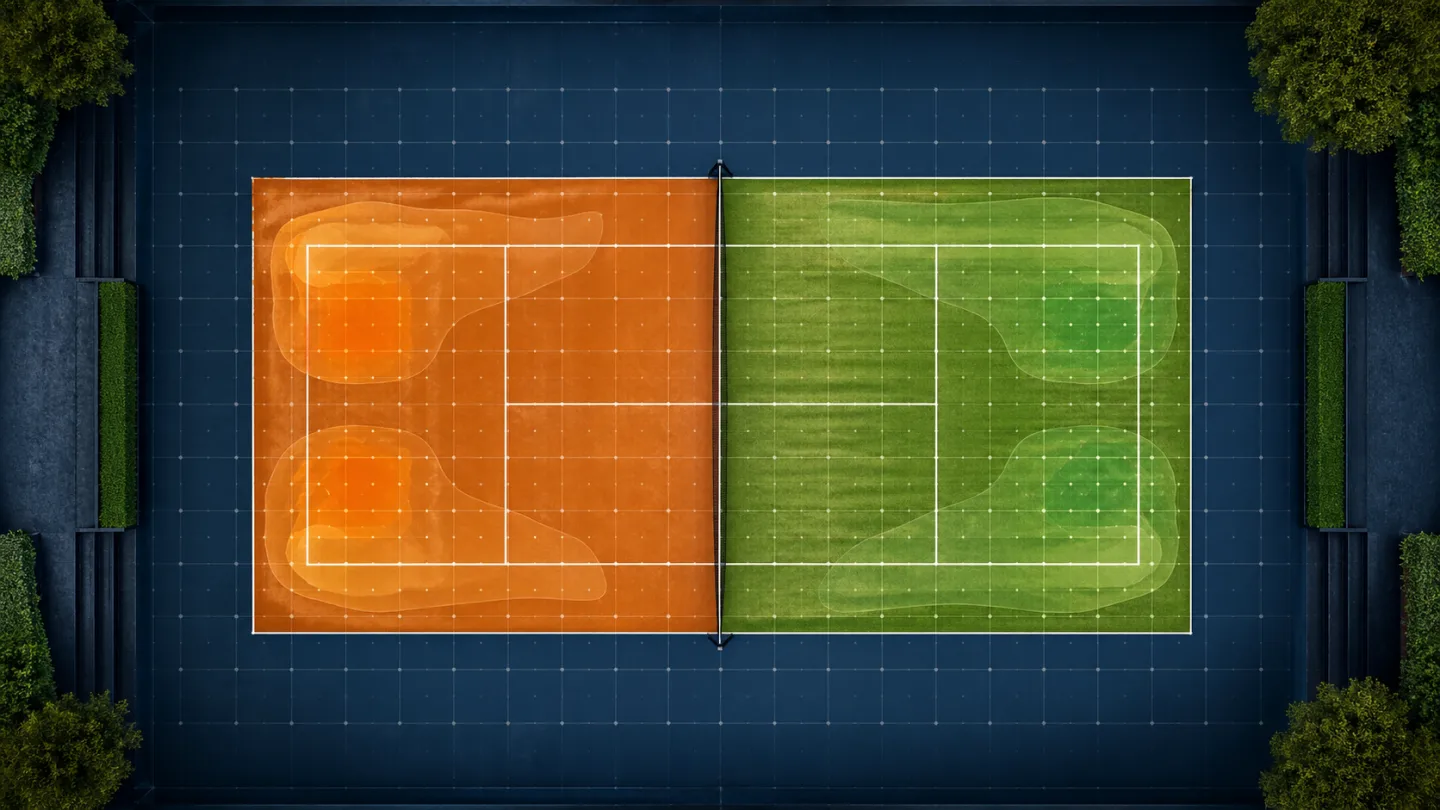
Tennis is the cleanest single-player betting market in the world. The structure of the sport produces a continuous stream of discrete probability events; the offshore operators that take tennis seriously price those events tightly and absorb serious stakes. The chapters below describe the market overview, the liquidity gradient across tours and tournament tiers, the bet-type breakdown that defines a serious tennis menu, the strategy notes for surface and form modelling, the live-betting workflow that converts the format's granularity into edge, and the operator selection criteria that decide whether the strategy can compound across a full season.
Market Overview, Tour Structure and Operator Attention
The professional tennis calendar is organised in a layered hierarchy: four Grand Slams, nine ATP Masters 1000 events, the equivalent WTA 1000 series, ATP 500 and ATP 250 tournaments, and the WTA 500 and WTA 250 layers. Below those tiers sit the Challenger Tour, the ITF Tour, and the junior events that supply the long-tail markets. Sharp Asian-route operators publish deep markets across all top-tier tournaments, deep but limit-capped markets on Challenger events, and thin or capped markets on ITF and junior matches. The disciplined bettor matches volume to depth and concentrates on the layers where the operator is genuinely engaged.
Liquidity is concentrated in two daily windows during a Grand Slam (mid-day session and night session) and during a Masters 1000 (morning Asia hours and prime European hours). The same tournament played outside those windows trades 30 to 60 percent thinner. The operator selection and the calendar awareness compound: a serious tennis desk active during a Grand Slam clears five-figure tickets on top matches, while the same desk on a Tuesday morning ATP 250 first round caps three-figure stakes. Knowing which tournament fits which window is the foundation of disciplined volume.
Liquidity by Tour and Tournament Tier
The chart summarises typical realised stake ceilings on the set handicap market for a sharp Asian-route or specialist tennis operator, ten minutes before match start, on the headline match of the session.
| Tour and tier | Typical pre-match ceiling (EUR) |
|---|---|
| Grand Slam, headline match | 15000 |
| Masters 1000 quarter or semi-final | 10000 |
| ATP or WTA 500 final | 6000 |
| ATP or WTA 250 main draw | 3500 |
| Challenger Tour, top match | 1500 |
| ITF tier-one event | 800 |
| ITF lower tier or qualifying | 250 |
The depth gradient is the operational reason a serious tennis bettor builds the calendar around top-tier tournaments. The same model applied across all tiers will succeed at the top and erode against thin lines below the Challenger threshold.
Bet Types Breakdown
Match winner
The headline market. Sharply priced on every match a serious operator covers, with 1.5 to 2.5 percent margin on tier-one tour matches. The depth on match winner is the second deepest after set handicap; the margin is the floor of what the bettor pays for any tennis bet. Match winner is the right starting point for portfolio volume when the model has a clean read on the overall match outcome and no specific structural angle on sets or games.
Set handicap
The workhorse market. In best-of-three, the line is typically -1.5 sets on the favoured side and +1.5 on the underdog; in best-of-five (men's Grand Slams), the line opens at -2.5 and -1.5 with mid-line variants at -1.5/-2.0. The set handicap carries deeper liquidity than match winner and tighter margin on the favoured-side line; serious volume routes here.
Total games and total sets
Total games is the most surface-sensitive market in tennis: clay produces longer matches, grass produces shorter ones, hard surfaces sit in between. A bettor with a structural read on the surface has a permanent edge against operators that use a generic player rating. Total sets in best-of-three is a binary market (over or under 2.5) that prices the probability of a straight-sets result; deeper than it looks, but with sharper movement than match winner.
Set scores and exact-score markets
The exact set score (2-0, 2-1, 0-2, 1-2 in best-of-three) is a four-way market that decomposes match winner and total sets into their joint distribution. The margin is wider, the depth is medium, and the edge tends to live with bettors who have a specific read on momentum and break patterns. The exact-score market is also the cleanest place to price a comeback story (favourite drops the first set) when the in-play book has not yet adjusted.
Player props and live micro-markets
Aces, double faults, breaks of serve, total games in a specific set, next-game winner, hold-or-break in the next service game. The micro-market column is rich and rewards bettors with a structural read on serving patterns, surface conditions, and player fatigue. Depth is shallower than the macro markets; the edge is concentrated on bettors who already have an information advantage going into the live session.
Strategy Notes for a Disciplined Tennis Operation
- Build a surface-aware model from day one. A generic player rating loses to any model that integrates clay, grass, indoor hard, and outdoor hard as separate competence dimensions.
- Concentrate volume on tier-one tour matches. Depth, margin, and operator attention all favour the top of the pyramid; the lower tiers are practice ground, not strategy ground.
- Use set handicap as the primary line, match winner as the secondary. The depth gradient and the margin gradient both favour the handicap.
- Trade live, not pre-match, when the model has a momentum read. The in-play tennis market re-prices on every point; a trader who reads momentum cleanly can extract two to three breakaway opportunities per match without touching the pre-match line.
- Watch the official ATP or WTA broadcast feed, not a delayed stream. Latency between the broadcast and the operator's price feed decides whether the live click is value or counter-edge.
- Time stakes against the operator's session attention. The desk is sharpest in prime European hours during a Grand Slam; the morning sessions and the late-night windows are softer and reward the patient bettor.
- Reconcile every settlement against the official tournament record. Retirements, walkovers, and rule-100 settlements (returned stakes on retirement before a set is complete) vary across operators; the rule book has to be checked once and applied uniformly.
Frequently Asked Questions
Why is tennis considered the sharpest individual sport for offshore bettors?
Because the structure of the game produces clean, frequent, and tradable price moves on every point. A break of serve is a measurable shift in win probability, a tiebreak is a discrete probability event, and the absence of a draw outcome simplifies the pricing problem. Sharp Asian-route operators run dedicated tennis desks, publish tight margins on top-tour matches, and absorb four-figure stakes on match winner and set handicap. The combination of tradable structure, deep in-play liquidity, and engaged sharp desks makes tennis the closest single-player analogue to the Asian football market.
What is the best bet type for serious tennis volume?
Set handicap on top-tour matches in best-of-three formats. The line is sharply priced, the margin is comparable to Asian football handicaps (around 2 to 3 percent), and the depth absorbs serious size. Match winner is broadly priced and rarely offers an edge against a sharp desk; total games and over-under set scores are deeper than they look but reward bettors with a specific surface or playing-style read. Player props (aces, double faults, breaks of serve) are micro-markets with thinner depth and wider margins; useful for situational edge, not for portfolio volume.
Are clay-court and grass-court markets priced differently?
Yes, materially. Clay-court matches reward consistent baseliners, slow the pace of points, and produce longer matches with more breaks of serve; grass-court matches reward big servers, accelerate the game, and produce more tiebreaks. Sharp operators integrate the surface into the model and produce different lines on identical players across surfaces; soft operators use a generic player rating that ignores surface specialisation, producing exploitable lines on the surfaces a bettor reads better than the desk does. The seasonal calendar concentrates the surface gradient in distinct windows, which is when the operator selection matters most.
How does live tennis betting compare to live football?
It is faster, more granular, and more tradable. Tennis re-prices on every point, every game, every set, and every break of serve. The latency model that matters in football matters even more in tennis because the price moves are more frequent. The disciplined live tennis bettor uses a sharp operator with sub-second matching, an official ATP or WTA data partner, and a structured trading rule that pre-defines the entry and exit conditions. The lazy live tennis bettor chases price moves in real time and pays the latency cost on every click.
Are offshore tennis books friendlier to winning bettors than soccer books?
On the margin, yes, on tier-one tour matches. The tennis desk runs with a smaller customer base, prices a more constrained product (no draws, simpler structure), and tolerates sharp behaviour for longer than the football desk. The friction shows up on lower-tier ITF events, where lines are thin and the operator limits sharp accounts within weeks. The disciplined approach is to concentrate on Grand Slams, ATP 500 and Masters 1000, and the WTA equivalents, where depth, sharpness, and operator tolerance are highest.